

Dr.LARACOSTA
New member
I’ve been in the digital space long enough to develop a healthy skepticism about traffic solutions. Actually, let me rephrase that — I’ve been in it long enough to develop an unhealthy cynicism. When you’ve tested as many tools as I have, you start to recognize patterns. The same screenshots of analytics dashboards. The same “explosive traffic” claims. The same countdown timers that somehow reset every time you refresh the page.
 ➤➤Don’t Miss Out — Click Here To Purchase From Official Website
Press enter or click to view image in full size
So when I first came across Traffic Panther, I almost scrolled past it. Another traffic tool promising the world for a low one-time price. I’ve seen that movie before, and I know how it ends — with a monthly subscription I forget to cancel and a support email that bounces back.
But here’s what made me pause. The angle wasn’t “here’s new software that generates traffic”. It was “I already have traffic, and I’m letting you tap into it”. That’s different. That’s not promising to build you a highway; that’s offering you an on-ramp to one that’s already running.
I decided to test it. Not because I believed the hype, but because I was genuinely curious whether this “tap into existing traffic” model could actually work for someone like me who’s tired of bleeding money on solo ads and Facebook pixels that never seem to learn.
I’ve sat through countless webinars where the host says “just run Facebook ads” as if that’s helpful advice. As if I haven’t already burned through hundreds of dollars testing interests and audiences only to end up with a few page likes and zero sales. As if solo ad providers haven’t sent me traffic that bounces faster than a rubber ball.
The platforms are getting tighter. The costs are climbing. And the window where you could throw up a basic landing page and watch commissions roll in? That window closed years ago.
So when Jamie Lewis — someone who’s actually been in this industry for 16 years, not some fresh face with a new course — said he had traffic from his YouTube channels, expired domains, and ongoing campaigns that he was willing to share, it at least deserved a look.
Traffic Panther is essentially a traffic rotator. You get access to a members area where you paste your affiliate link — specifically for offers in the Internet Marketing, Make Money Online, Crypto, Domaining, or Work From Home niches. That link then gets inserted into a rotation system that sends real visitor traffic from Jamie’s existing campaigns to your offer.
The traffic itself comes from multiple sources:
The first time I did it, I sat there staring at my screen waiting for something to happen. That’s how conditioned we are to complex setups. When something is actually simple, it feels like we must be missing a step.
The members area is straightforward. It’s not flashy. There’s no overly designed dashboard with fake metrics or progress bars that make you feel accomplished for doing nothing. It’s a form, some instructions, and access to training materials.
I pasted in a link to a ClickBank offer I’d been testing (a crypto trading course that had been converting at about 2% for me with solo ad traffic). Within a few hours, I started seeing hops in my ClickBank analytics. Not a flood — I want to be clear about that — but a steady trickle.
By the end of day one, I had 47 hops. No sales yet, but traffic that actually stayed on the page longer than 3 seconds, which was already an improvement over some solo ad traffic I’d bought.
Day two, I had my first sale. A $97 commission.
Press enter or click to view image in full size
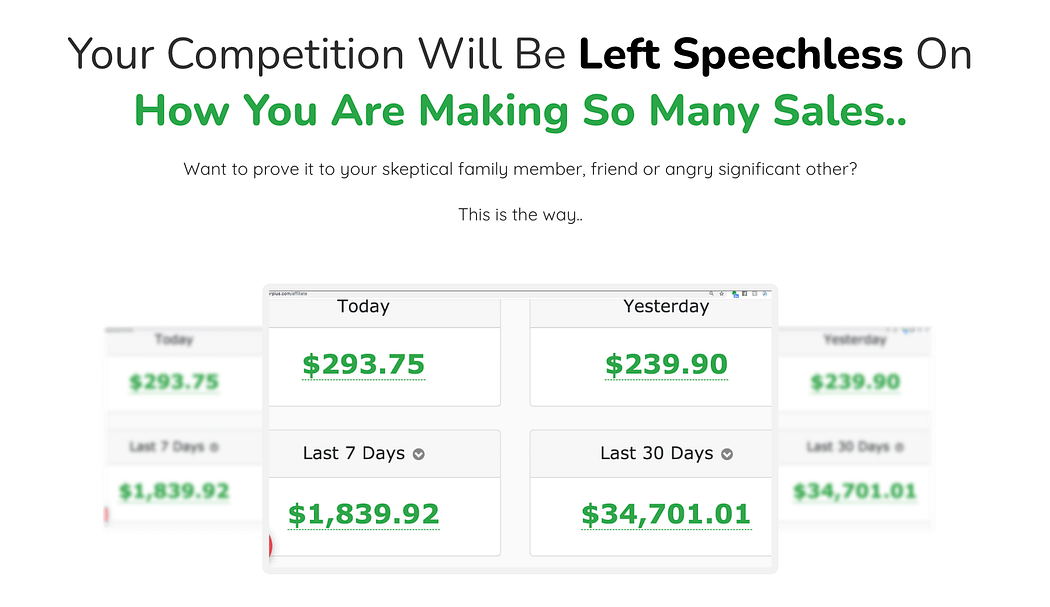
Now, I’m not going to sit here and tell you I made thousands of dollars overnight. That’s not what happened. But what did happen is that I finally had a traffic source that didn’t require constant babysitting. I didn’t have to check ad accounts. I didn’t have to wonder if my pixel was firing. I just… let it run.
The surprising part came in week two. I tested a different offer — a domain flipping course — and saw similar engagement patterns. The traffic was consistently interested in the niche. It wasn’t random. It wasn’t bot traffic (I checked my analytics for bounce rates and time on page). It was real people who had come to Jamie’s ecosystem looking for online business information and were now seeing my offer.
The “AI Traffic Generator” — Usually just bot traffic that destroys your conversion metrics and can get your affiliate accounts flagged.
The Solo Ad Marketplace — You pay per click, but the quality varies wildly, and good luck getting a refund when the provider sends you traffic from countries you didn’t target.
The Training Course — Someone teaches you how to get traffic, which is great if you have months to implement and test.
The Software Tool — Claims to generate traffic but usually requires you to build backlinks or create content first.
Traffic Panther is none of these. It’s not teaching you to get traffic. It’s not giving you a tool to generate traffic. It’s literally letting you borrow traffic that already exists.
This distinction matters because it changes the timeline. You’re not waiting for results. You’re not hoping the algorithm figures out your targeting. The traffic is already flowing. You’re just inserting yourself into the stream.
When I run Facebook ads, part of my brain is always occupied. Did the pixel install correctly? Is the creative getting fatigued? Should I increase the budget? What’s my cost per result? Am I going to wake up to a suspended account?
When I buy solo ads, I’m constantly refreshing stats, wondering if the clicks are real, calculating whether I need to ask for a refund.
With Traffic Panther, that mental load is gone. There’s nothing to manage. There’s no budget to monitor. There’s no account that might get banned. I paste a link and then I can focus on other parts of my business — creating content, building email lists, testing new offers.
For me, that alone has been worth the entry price. Time is the one resource you can’t get back, and any tool that saves me time while still producing results is valuable.
➤➤Don’t Miss Out — Click Here To Purchase From Official WebsitePress enter or click to view image in full size
So when I first came across Traffic Panther, I almost scrolled past it. Another traffic tool promising the world for a low one-time price. I’ve seen that movie before, and I know how it ends — with a monthly subscription I forget to cancel and a support email that bounces back.
But here’s what made me pause. The angle wasn’t “here’s new software that generates traffic”. It was “I already have traffic, and I’m letting you tap into it”. That’s different. That’s not promising to build you a highway; that’s offering you an on-ramp to one that’s already running.
I decided to test it. Not because I believed the hype, but because I was genuinely curious whether this “tap into existing traffic” model could actually work for someone like me who’s tired of bleeding money on solo ads and Facebook pixels that never seem to learn.
The Real Problem Nobody Talks About
If you’ve been in affiliate marketing for more than a week, you know the actual bottleneck. It’s not your funnel. It’s not your copy. It’s not even the product you’re promoting. It’s getting eyes on any of it.I’ve sat through countless webinars where the host says “just run Facebook ads” as if that’s helpful advice. As if I haven’t already burned through hundreds of dollars testing interests and audiences only to end up with a few page likes and zero sales. As if solo ad providers haven’t sent me traffic that bounces faster than a rubber ball.
The platforms are getting tighter. The costs are climbing. And the window where you could throw up a basic landing page and watch commissions roll in? That window closed years ago.
So when Jamie Lewis — someone who’s actually been in this industry for 16 years, not some fresh face with a new course — said he had traffic from his YouTube channels, expired domains, and ongoing campaigns that he was willing to share, it at least deserved a look.
What Traffic Panther Actually Does
Let me strip away the sales copy and tell you what this is in plain terms.Traffic Panther is essentially a traffic rotator. You get access to a members area where you paste your affiliate link — specifically for offers in the Internet Marketing, Make Money Online, Crypto, Domaining, or Work From Home niches. That link then gets inserted into a rotation system that sends real visitor traffic from Jamie’s existing campaigns to your offer.
The traffic itself comes from multiple sources:
- His YouTube channels focused on online business content
- Expired domains that still receive type-in traffic or have existing backlink authority
- Ongoing ad campaigns he’s running
- His personal brand recognition (people who know Jamie Lewis and click through on his recommendations)
The first time I did it, I sat there staring at my screen waiting for something to happen. That’s how conditioned we are to complex setups. When something is actually simple, it feels like we must be missing a step.
The Experience of Using It Day to Day
I’ll be honest about the onboarding because I think this matters for trust.The members area is straightforward. It’s not flashy. There’s no overly designed dashboard with fake metrics or progress bars that make you feel accomplished for doing nothing. It’s a form, some instructions, and access to training materials.
I pasted in a link to a ClickBank offer I’d been testing (a crypto trading course that had been converting at about 2% for me with solo ad traffic). Within a few hours, I started seeing hops in my ClickBank analytics. Not a flood — I want to be clear about that — but a steady trickle.
By the end of day one, I had 47 hops. No sales yet, but traffic that actually stayed on the page longer than 3 seconds, which was already an improvement over some solo ad traffic I’d bought.
Day two, I had my first sale. A $97 commission.
Press enter or click to view image in full size
Now, I’m not going to sit here and tell you I made thousands of dollars overnight. That’s not what happened. But what did happen is that I finally had a traffic source that didn’t require constant babysitting. I didn’t have to check ad accounts. I didn’t have to wonder if my pixel was firing. I just… let it run.
The surprising part came in week two. I tested a different offer — a domain flipping course — and saw similar engagement patterns. The traffic was consistently interested in the niche. It wasn’t random. It wasn’t bot traffic (I checked my analytics for bounce rates and time on page). It was real people who had come to Jamie’s ecosystem looking for online business information and were now seeing my offer.
What Makes This Different
I’ve tested a lot of traffic tools. Most fall into a few categories:The “AI Traffic Generator” — Usually just bot traffic that destroys your conversion metrics and can get your affiliate accounts flagged.
The Solo Ad Marketplace — You pay per click, but the quality varies wildly, and good luck getting a refund when the provider sends you traffic from countries you didn’t target.
The Training Course — Someone teaches you how to get traffic, which is great if you have months to implement and test.
The Software Tool — Claims to generate traffic but usually requires you to build backlinks or create content first.
Traffic Panther is none of these. It’s not teaching you to get traffic. It’s not giving you a tool to generate traffic. It’s literally letting you borrow traffic that already exists.
This distinction matters because it changes the timeline. You’re not waiting for results. You’re not hoping the algorithm figures out your targeting. The traffic is already flowing. You’re just inserting yourself into the stream.
The Mental Load Reduction
Here’s something reviewers rarely talk about: the cognitive cost of managing traffic.When I run Facebook ads, part of my brain is always occupied. Did the pixel install correctly? Is the creative getting fatigued? Should I increase the budget? What’s my cost per result? Am I going to wake up to a suspended account?
When I buy solo ads, I’m constantly refreshing stats, wondering if the clicks are real, calculating whether I need to ask for a refund.
With Traffic Panther, that mental load is gone. There’s nothing to manage. There’s no budget to monitor. There’s no account that might get banned. I paste a link and then I can focus on other parts of my business — creating content, building email lists, testing new offers.
For me, that alone has been worth the entry price. Time is the one resource you can’t get back, and any tool that saves me time while still producing results is valuable.