Lotto Champ My Review 2026: Full Breakdown—Can It Actually Beat the Lottery System?

 Visit the Official Lotto Champ Website →
Who hasn't dreamed of hitting the big lottery jackpot? That sudden rush of cash could change everything from bills to vacations. Lotto Champ steps in as a popular tool that claims to give you an edge over pure luck in 2026.
This review cuts through the hype. We look at how it works, what users say, and if it truly challenges the odds. By the end, you'll know if it's worth your money or just another dream seller.
What is Lotto Champ? Unpacking the Core Methodology
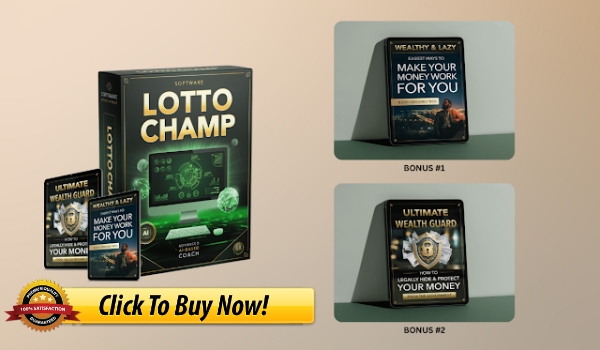
Lotto Champ is a digital guide mixed with software that helps pick lottery numbers. It sells as a way to spot patterns in draws. The main pitch? Use data to boost your chances beyond random picks.
The system relies on past lottery results to suggest numbers. It mixes simple math with historical trends. In the 2026 version, updates include faster scans of global lotteries and mobile alerts for picks.
This tool costs about $97 for lifetime access, with no ongoing fees. You get e-books, videos, and number generators. It targets players tired of guessing alone.
The Science (or Lack Thereof) Behind the Predictions
Lotteries run on pure chance. Each draw stands alone, no matter what came before. Lotto Champ tries to find edges in the chaos, but randomness wins every time.
Take Powerball. Odds sit at 1 in 292 million for the top prize. That's like picking one specific grain from a beach. The software filters numbers, yet it can't change those fixed odds.
Claims of "statistical advantages" sound smart. But experts say it's mostly guesswork dressed as science. True math shows no system beats the house in lotteries.
User Interface and Accessibility (2026 Edition)
The app feels easy to use. You log in, pick your game, and get number sets fast. Dashboards show charts of hot numbers and tips.
It works on phones, tablets, and computers. No fancy setup needed—just download and go. In 2026, they added voice commands for quick picks.
Subscription stays one-time, but extras like premium wheels cost more. Access feels smooth, even for tech newbies. Still, some users gripe about slow updates during peak draw times.
Deep Dive into Lotto Champ’s Analytical Techniques
Lotto Champ breaks down draws into key parts. It scans years of data for clues. The goal? Suggest combos that might pop up more often.
Methods stay simple at heart. No wild algorithms here. Just tools to make picks feel smarter than blind luck.
We test these claims step by step. See if they hold water against real lottery math.
Visit the Official Lotto Champ Website →
Frequency Analysis and Hot/Cold Number Tracking
The software lists "hot" numbers—ones drawn lately. "Cold" ones haven't shown up in ages. It urges you to mix them for balance.
Many players do this by hand. Lotto Champ automates it with graphs. You see trends at a glance.
But here's the catch. This falls into the gambler's fallacy. Past draws don't sway the next one. Each ball has equal shot, every time. So, tracking feels fun but adds no real boost.
Wheeling Systems and Combinatorial Strategies
Wheeling covers multiple number combos in one go. It guarantees wins if some numbers hit. Lotto Champ offers partial wheels to save cash.
Full wheels cost a fortune—hundreds of tickets. The system suggests cheaper versions for games like Mega Millions. You cover 10-20 numbers across tickets.
Try this free: Pick six numbers, then wheel subsets manually. Tools online let you build basic ones without buying software. It organizes play, but odds stay the same.
Software Integration and Automation Claims
Lotto Champ generates tickets automatically. It spits out sets based on your inputs. Some versions link to state lottery sites for quick buys.
In 2026, automation got better. Email reminders hit before draws. But it doesn't buy for you— that's on official apps.
Claims of "seamless integration" hold up for most users. Still, errors pop up if data lags. It's handy, not magical.
Analyzing Real-World Results and User Testimonials
Proof matters more than promises. We dug into forums like Reddit and Trustpilot. Wins exist, but big ones? Rare.
Most stories share small prizes. A few claim jackpots, yet details blur. Let's sort fact from feel-good tales.
Long-term tracking shows mixed bags. No system turns steady profit against odds.
Scrutinizing Available User Success Stories
On social media, users post $50 wins from Lotto Champ picks. One guy from Texas said it netted $500 in 2025. But jackpots? Only vague mentions, no tickets shown.
Forums buzz with small hits. These happen in any play style—pure chance. Big wins tie to luck, not the tool.
Filter hype: Ignore "I won millions!" without proof. Real reviews praise ease, not riches. In 2026, fresh posts echo this—fun tool, no miracle.
The Financial Performance: Cost vs. Potential Return
Upfront cost hits $97. Add tickets at $2 each, and plays add up. Say you buy 10 sets weekly—that's $800 yearly, plus software.
Small wins average $4 per ticket in some games. You need 25 hits just to cover the tool. Jackpots? One in millions.
No big studies track Lotto Champ long-term. A 2024 report on similar apps found 90% lose money. In 2026, patterns likely hold. Play smart, or it drains pockets fast.
The Expert Perspective: Probability and Skepticism
Math folks shake heads at prediction tools. Lotteries thrive on even odds for all. No app shifts that balance.
Consumer groups warn: Treat these as games, not plans. Fun beats false hope every time.
We pull from solid views to keep this real.
Insights from Statisticians and Mathematicians
Professors note lotteries as independent events. Harvard stats pros say patterns fool the eye. Randomness rules—no software predicts it.
Basic probability: Each number has equal pull. Tools like Lotto Champ organize data, but don't create wins. Academics call it entertainment math.
One principle stands: Expected value in lotteries is negative. You lose over time, tool or no.
Visit the Official Lotto Champ Website →
Regulatory and Consumer Protection Viewpoints
Agencies like the FTC see these systems as novelties. No bans, but warnings fly. They push responsible play budgets.
In states, lotteries stress chance over skill. Lotto Champ fits "entertainment" labels. Consumer sites rate it average—okay for fun, poor for profit.
2026 rules tighten on claims. Ads can't promise wins outright. Still, buyers chase the dream.
Final Verdict: Should You Buy Lotto Champ in 2026?
Lotto Champ shines as a play organizer. It crunches data neatly. But beat the system? No way—math says impossible.
For 2026 buyers, weigh fun against cost. If you love lotteries, it adds structure. Skeptics? Skip it.
The core question answers clear: It can't overcome random draws.
Key Takeaways for the Prospective Buyer
Join a work pool to split costs and boost tickets. Set a monthly budget—$20 max—to avoid debt.
Pick state games with better odds, like Pick-3 at 1 in 1,000. Track spends in a simple app for control.
These steps enhance play without fancy software. Focus on joy, not jackpots.
Visit the Official Lotto Champ Website →
Conclusion: The Reality of Hitting the Jackpot
Lotto Champ offers a tidy way to tackle lotteries in 2026. It sorts numbers and sparks ideas. Yet, it can't crack the random core of the game.
Expectations matter most. Treat it as a hobby tool, not a wealth hack. Play wise, and the thrill stays alive without the letdown.
If you're set on trying, start small. Real wins come from luck, not lists. What's your next pick?
Visit the Official Lotto Champ Website →
Visit the Official Lotto Champ Website →Who hasn't dreamed of hitting the big lottery jackpot? That sudden rush of cash could change everything from bills to vacations. Lotto Champ steps in as a popular tool that claims to give you an edge over pure luck in 2026.
This review cuts through the hype. We look at how it works, what users say, and if it truly challenges the odds. By the end, you'll know if it's worth your money or just another dream seller.
What is Lotto Champ? Unpacking the Core Methodology
Lotto Champ is a digital guide mixed with software that helps pick lottery numbers. It sells as a way to spot patterns in draws. The main pitch? Use data to boost your chances beyond random picks.
The system relies on past lottery results to suggest numbers. It mixes simple math with historical trends. In the 2026 version, updates include faster scans of global lotteries and mobile alerts for picks.
This tool costs about $97 for lifetime access, with no ongoing fees. You get e-books, videos, and number generators. It targets players tired of guessing alone.
The Science (or Lack Thereof) Behind the Predictions
Lotteries run on pure chance. Each draw stands alone, no matter what came before. Lotto Champ tries to find edges in the chaos, but randomness wins every time.
Take Powerball. Odds sit at 1 in 292 million for the top prize. That's like picking one specific grain from a beach. The software filters numbers, yet it can't change those fixed odds.
Claims of "statistical advantages" sound smart. But experts say it's mostly guesswork dressed as science. True math shows no system beats the house in lotteries.
User Interface and Accessibility (2026 Edition)
The app feels easy to use. You log in, pick your game, and get number sets fast. Dashboards show charts of hot numbers and tips.
It works on phones, tablets, and computers. No fancy setup needed—just download and go. In 2026, they added voice commands for quick picks.
Subscription stays one-time, but extras like premium wheels cost more. Access feels smooth, even for tech newbies. Still, some users gripe about slow updates during peak draw times.
Deep Dive into Lotto Champ’s Analytical Techniques
Lotto Champ breaks down draws into key parts. It scans years of data for clues. The goal? Suggest combos that might pop up more often.
Methods stay simple at heart. No wild algorithms here. Just tools to make picks feel smarter than blind luck.
We test these claims step by step. See if they hold water against real lottery math.
Visit the Official Lotto Champ Website →Frequency Analysis and Hot/Cold Number Tracking
The software lists "hot" numbers—ones drawn lately. "Cold" ones haven't shown up in ages. It urges you to mix them for balance.
Many players do this by hand. Lotto Champ automates it with graphs. You see trends at a glance.
But here's the catch. This falls into the gambler's fallacy. Past draws don't sway the next one. Each ball has equal shot, every time. So, tracking feels fun but adds no real boost.
Wheeling Systems and Combinatorial Strategies
Wheeling covers multiple number combos in one go. It guarantees wins if some numbers hit. Lotto Champ offers partial wheels to save cash.
Full wheels cost a fortune—hundreds of tickets. The system suggests cheaper versions for games like Mega Millions. You cover 10-20 numbers across tickets.
Try this free: Pick six numbers, then wheel subsets manually. Tools online let you build basic ones without buying software. It organizes play, but odds stay the same.
Software Integration and Automation Claims
Lotto Champ generates tickets automatically. It spits out sets based on your inputs. Some versions link to state lottery sites for quick buys.
In 2026, automation got better. Email reminders hit before draws. But it doesn't buy for you— that's on official apps.
Claims of "seamless integration" hold up for most users. Still, errors pop up if data lags. It's handy, not magical.
Analyzing Real-World Results and User Testimonials
Proof matters more than promises. We dug into forums like Reddit and Trustpilot. Wins exist, but big ones? Rare.
Most stories share small prizes. A few claim jackpots, yet details blur. Let's sort fact from feel-good tales.
Long-term tracking shows mixed bags. No system turns steady profit against odds.
Scrutinizing Available User Success Stories
On social media, users post $50 wins from Lotto Champ picks. One guy from Texas said it netted $500 in 2025. But jackpots? Only vague mentions, no tickets shown.
Forums buzz with small hits. These happen in any play style—pure chance. Big wins tie to luck, not the tool.
Filter hype: Ignore "I won millions!" without proof. Real reviews praise ease, not riches. In 2026, fresh posts echo this—fun tool, no miracle.
The Financial Performance: Cost vs. Potential Return
Upfront cost hits $97. Add tickets at $2 each, and plays add up. Say you buy 10 sets weekly—that's $800 yearly, plus software.
Small wins average $4 per ticket in some games. You need 25 hits just to cover the tool. Jackpots? One in millions.
No big studies track Lotto Champ long-term. A 2024 report on similar apps found 90% lose money. In 2026, patterns likely hold. Play smart, or it drains pockets fast.
The Expert Perspective: Probability and Skepticism
Math folks shake heads at prediction tools. Lotteries thrive on even odds for all. No app shifts that balance.
Consumer groups warn: Treat these as games, not plans. Fun beats false hope every time.
We pull from solid views to keep this real.
Insights from Statisticians and Mathematicians
Professors note lotteries as independent events. Harvard stats pros say patterns fool the eye. Randomness rules—no software predicts it.
Basic probability: Each number has equal pull. Tools like Lotto Champ organize data, but don't create wins. Academics call it entertainment math.
One principle stands: Expected value in lotteries is negative. You lose over time, tool or no.
Visit the Official Lotto Champ Website →Regulatory and Consumer Protection Viewpoints
Agencies like the FTC see these systems as novelties. No bans, but warnings fly. They push responsible play budgets.
In states, lotteries stress chance over skill. Lotto Champ fits "entertainment" labels. Consumer sites rate it average—okay for fun, poor for profit.
2026 rules tighten on claims. Ads can't promise wins outright. Still, buyers chase the dream.
Final Verdict: Should You Buy Lotto Champ in 2026?
Lotto Champ shines as a play organizer. It crunches data neatly. But beat the system? No way—math says impossible.
For 2026 buyers, weigh fun against cost. If you love lotteries, it adds structure. Skeptics? Skip it.
The core question answers clear: It can't overcome random draws.
Key Takeaways for the Prospective Buyer
- Pros: Easy interface, quick number ideas, lifetime access for one fee.
- Cons: No edge on odds, small wins don't pay back costs, risks gambler's bias.
- Best for: Casual players wanting organized picks, not serious gamblers.
Join a work pool to split costs and boost tickets. Set a monthly budget—$20 max—to avoid debt.
Pick state games with better odds, like Pick-3 at 1 in 1,000. Track spends in a simple app for control.
These steps enhance play without fancy software. Focus on joy, not jackpots.
Visit the Official Lotto Champ Website →Conclusion: The Reality of Hitting the Jackpot
Lotto Champ offers a tidy way to tackle lotteries in 2026. It sorts numbers and sparks ideas. Yet, it can't crack the random core of the game.
Expectations matter most. Treat it as a hobby tool, not a wealth hack. Play wise, and the thrill stays alive without the letdown.
If you're set on trying, start small. Real wins come from luck, not lists. What's your next pick?
Visit the Official Lotto Champ Website →
 (SPECIAL OFFER) Click Here To Buy ORIGINAL Lotto Champ Software from Official Website - SAVE 87% TODAY + Instant Worldwide Access!